
The Adoption Problem: Why Your Last CRM Did Not Stick
Somewhere in your browser history there is a login you stopped using. You paid for it, you sat through the onboarding call, you spent a weekend importing contacts, and for about three weeks you were genuinely excited about it. Then a listing went under agreement, a buyer needed an offer written on a Saturday, and you went back to your phone, your inbox, and the way you have always done it. The subscription kept billing. You kept meaning to get back into it.
Almost every experienced agent has one of these. The story we tell ourselves afterward is that the software was wrong. Sometimes it was. Far more often it was fine, and nothing around it ever made using it easier than not using it.
Buying Software Is Not the Same as Changing How You Work
A CRM purchase is a transaction that happens in an afternoon. What you are actually buying is a change in daily behavior: logging a call you would rather just make, writing a note you already remember, updating a stage that only matters three months from now. That change takes months, and it competes directly with the part of your job that produces income today.
This is why the usual comparison is the wrong one. Feature grids measure what a platform can do, not whether you will still be doing it in March. Two platforms with identical capability lists can produce completely different outcomes in the same business, because capability was never the variable.
Where Adoption Actually Dies
It rarely dies at the decision. It dies quietly, in a handful of predictable places.
- The import. The database comes over messy, so the first thing the new system shows you is a mess you did not make. Opening it feels like chores, and you start avoiding it.
- The first busy week. Something real happens in your business and the new habit is the first thing dropped. Nothing catches the drop, so nobody notices, including you.
- The blank setup. The pipeline stages, the tags, and the automations came out of the box and do not match how you actually sell. Every time you use the system you are translating your business into someone else's vocabulary.
- The silent stretch. Weeks go by with no one asking how it is going. Your account is live, your payment clears, and whether you log in at all makes no difference to anyone outside your office.
Not one of these is a feature gap. They are all gaps in the space around the software, which is exactly the space most purchases leave empty.
Why "Just Use It" Never Works
The instinct is to solve this with resolve. New quarter, fresh start, this time you will keep it current. That works for a while and then stops, for the same reason it stops with the gym in February. Discipline is finite, and your job is designed to spend it somewhere else.
The two methodologies this business is built on both account for that. Ninja Selling and Mike Ferry are each built on a small set of daily activities, done whether or not you feel like it, with accountability wrapped around them. The accountability is not a motivational add-on. It is the part that makes the activity survive a bad week.
Software that arrives without that wrapper asks you to supply the hardest ingredient yourself, on top of everything else you are carrying.
What Reinforcement Actually Looks Like
Reinforcement is unglamorous and specific. In practice it means a few things exist that usually do not.
- Setup done for you, not handed to you. A system that is already working the day you log in, built around how producing agents actually work, rather than a blank install you are left to configure in whatever time you can find.
- A short list of daily actions, not a manual. Three things to do every morning beats a feature tour nobody finishes.
- Coaching that comes with the software, not sold separately. Ninja Selling and Mike Ferry both put a coaching relationship around the daily activities. When that arrives attached to the system, the habit has somewhere to be answered for. When you have to go find it yourself, most people never do.
- A recovery path. Everybody falls off. The question is whether there is an obvious way back in, or whether falling off is the end of it.
- Something in your pocket. If updating the system requires being at a desk, it will not happen, because your business does not happen at a desk.
You can assemble all of this yourself, and plenty of disciplined agents have. Just know that you are assembling it rather than assuming it came with the license. A platform like Real Estate Easier is built the other way around, with the coaching and the configuration part of the product instead of something you go find afterward.
Ask the Adoption Question Before You Buy
Next time you evaluate a platform, spend less of the demo on what it can do and more on what happens after the card is charged. Who configures it, and when. What the first thirty days look like on a calendar. Whether coaching and accountability come with the software or are sold separately. What support looks like in month four, not only in week one.
Those answers predict your outcome better than any feature list, because they describe the only thing that has ever determined whether a CRM works: whether you are still in it a year later.
Worth a Conversation
If you have abandoned a CRM before and you are wary of doing it again, that instinct is right and worth taking seriously. Real Estate Easier is built to make the hard stuff easier, so you can spend more time on the parts of this business you actually love. See how it works at realestateeasier.com, or call 617-675-5787 and ask exactly the questions above.
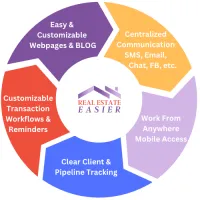
All Your Real Estate Tools And Systems In One Place


© 2026 Real Estate Easier LLC - All Rights Reserved.