

Nurture Sequences That Do Not Sound Like a Robot Wrote Them
Every agent knows the feeling. You open your own drip campaign, read the first line, and think: no human would ever say this. "I wanted to reach out and touch base regarding your home search journey." Nobody talks like that. And your database can tell.
The problem is not automation itself. Automation is what lets you stay in front of hundreds of contacts without living in your inbox. The problem is sequences that sound generic, stiff, and interchangeable with every other agent using the same stock templates. If your nurture emails read like a machine wrote them, your leads quietly file you under "ignore." Here is how to fix that.
Write Like You Actually Talk
Read your sequence out loud. If a sentence makes you cringe or trips your tongue, it will land the same way with your reader. Real conversation is short. It uses contractions. It asks direct questions. It does not open with "I hope this email finds you well."
Try this instead: pull up the last three texts you sent a client you like. Notice the rhythm. That is your actual voice, and it is far more persuasive than the polished corporate tone most templates default to. Your nurture sequence should sound like the same person who shows up at the showing, not a different persona that only lives in email.
One Idea Per Message
Robotic sequences try to do everything at once: introduce yourself, share five market stats, list your services, and ask for a referral, all in one breath. A real person does not info-dump. They make one point and get out.
Give each email or text a single job. One message shares a useful neighborhood update. The next checks in with a genuine question. Another offers a specific resource. When every touch has one clear purpose, the whole sequence feels intentional instead of automated for the sake of automation.
Timing Is Part of the Voice
A message that sounds human but arrives at the wrong moment still feels robotic. Nobody sends a warm, casual note at exactly 3:00 a.m., and nobody sends seven emails in four days unless a machine is driving. Space your touches the way a thoughtful person would: enough to stay present, not so much that you become noise.
The best sequences also respond to behavior. If someone clicks a listing, the next message should acknowledge that interest rather than continuing a script that ignores what just happened. That responsiveness is what separates a real relationship from a broadcast.
Personalize Beyond the First Name
Merge fields are the bare minimum, and "Hi [FIRST NAME]" fools no one anymore. Real personalization means the content reflects who the person actually is: a buyer focused on a specific town, a past client at a certain anniversary, a seller weighing whether now is the right time.
You do not have to hand-write every message to get there. Segment your database so each group receives content that fits their situation, then let your system handle the delivery. The goal is that any given contact reads a message and thinks, "This is relevant to me," not "I got added to a list."
Let Your Tools Sound Like You
Here is where most agents get stuck. They want the reach of automation without the robotic feel, and the off-the-shelf tools push them toward cookie-cutter sequences that sound like everyone else. That is a tooling problem, not a you problem.
This is where a platform like Real Estate Easier changes the equation: instead of forcing you into generic templates, its customizable AI molds to your voice, your market, and the way you already communicate, so automation amplifies your personality rather than flattening it. When your tools bend to fit you, "sounding human at scale" stops being a contradiction.
The Quick Audit
Before your next sequence goes live, run three checks. First, would you actually say this sentence to a client's face? Second, does each message have one clear purpose? Third, would this feel relevant to the specific person receiving it, or could it go to anyone?
If any answer is no, edit until it is yes. A nurture sequence is not a set-it-and-forget-it billboard. It is an ongoing conversation you happen to be running at scale, and the agents who win the long game are the ones whose contacts forget a system is even involved.
If your nurture sequence sounds like a script instead of you, it is worth rethinking the tools behind it. See how a platform that molds to your voice handles this at realestateeasier.com.
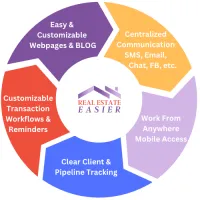
All Your Real Estate Tools And Systems In One Place


© 2026 Real Estate Easier LLC - All Rights Reserved.