

The Ultimate Real Estate Growth Stack: Build the System That Scales Your Production
Why Most Agents Hit a Ceiling and Never Break Through
You close a solid year. You grind through spring market. You hit your number... and then you hit a wall. The leads pile up, follow-up falls apart, and the next transaction always feels like it comes from luck rather than design. That is not a motivation problem. That is a systems problem.
The agents and teams who consistently grow production year over year are not outworking everyone else. They have built what is called a growth stack: a layered set of tools, workflows, and disciplines that convert attention into appointments, appointments into contracts, and contracts into referrals. This post breaks down exactly what that stack looks like and how to build yours.
What a Real Estate Growth Stack Actually Is
A growth stack is the deliberate combination of lead generation, lead conversion, pipeline management, and client retention systems that compound on each other. Think of it as infrastructure, not a single app or tactic.
The stack has four distinct layers:
- Top of funnel: How people find you and raise their hand
- Conversion layer: How you turn a hand-raise into a conversation
- Pipeline layer: How you track and advance every relationship toward a transaction
- Retention and referral layer: How you turn past clients into a repeatable revenue source
Most agents only operate one or two of these layers deliberately. The rest is improvised. That improvisation is exactly where production stalls.
Layer One: Top of Funnel
Generate Leads With Intention, Not Volume
The Ninja Selling system, developed by Larry Kendall, teaches that your database is your business. That premise is foundational to everything in the growth stack. The goal at the top of the funnel is not to generate the most leads. It is to generate the right leads with enough consistency to keep the pipeline full without requiring a massive advertising budget to sustain it.
Effective top-of-funnel sources for a scalable real estate business typically include:
- Sphere of influence outreach on a structured weekly cadence
- Content marketing through video, local market reports, and search-optimized blog content
- Paid lead programs used selectively and with clear cost-per-acquisition benchmarks
- Strategic referral partnerships with mortgage professionals, CPAs, and estate attorneys
The discipline here is not in choosing one source. It is in tracking every source so you know exactly where your business comes from. Without that data, you are guessing at where to invest your time and money.
Layer Two: The Conversion Layer
Speed and Structure Win Conversations
According to the National Association of Realtors, 74 percent of buyers work with the first agent they speak with (NAR 2023 Profile of Home Buyers and Sellers). That statistic reframes the conversion layer entirely. The agent who responds first with a structured, confident conversation wins the client in the majority of cases.
The conversion layer has two components: speed and script.
Speed means an automated or near-automated initial response that happens within minutes of a lead registering. This is where your CRM earns its keep. A lead that waits four hours for a callback is already talking to someone else.
Script means having a practiced, repeatable conversation framework. The Mike Ferry pre-qualification script is one of the most field-tested frameworks in the industry because it is built around asking direct questions, qualifying motivation, and booking an appointment... not building rapport through small talk. Confidence on the phone comes from repetition, not personality.
Your conversion layer should produce a clear outcome for every lead contact: appointment booked, future follow-up scheduled, or lead removed from active pipeline. Every lead needs a decision, not a maybe.
Layer Three: The Pipeline Layer
Manage Relationships, Not Just Transactions
A pipeline is not a list of active buyers and sellers. A real pipeline includes everyone in your database who has a future reason to transact, segmented by timeline and relationship temperature.
High-performing agents typically segment their database into at least three tiers:
- Tier One (Hot): Active buyers and sellers working toward a close in the next 90 days
- Tier Two (Warm): Contacts with a defined intent to transact within the next six to 18 months
- Tier Three (Database): Everyone else who knows you and would likely refer you
Each tier requires a different contact frequency and communication style. Tier One gets weekly direct contact. Tier Two gets consistent value-driven touches through market updates, check-in calls, and relevant content. Tier Three gets a systematic nurture sequence that keeps you top of mind without requiring manual effort every week.
The pipeline layer is where most teams break down because they manage Tier One well and ignore the rest. That is a referral and repeat-business leak that compounds quietly until production plateaus.
Layer Four: Retention and Referral
Close the Loop and Open the Next Transaction
The most efficient business development you can do is with people who already trust you. According to the NAR 2023 Profile of Home Buyers and Sellers, 39 percent of buyers and 63 percent of sellers used an agent they had worked with before or received from a referral. That means the majority of the market is already predisposed to repeat or referred business, and most agents fail to capture it simply because they stop following up after closing.
A retention and referral system does not require elaborate gifts or expensive events. It requires:
- A defined post-close follow-up sequence (30-day, 90-day, six-month, and annual check-ins)
- A simple, non-pushy ask for introductions built into your natural conversation rhythm
- A consistent value delivery mechanism that reminds past clients you are still active and knowledgeable in their market
The Ninja Nine, the core daily habits from Ninja Selling methodology, embeds these touches into your daily routine so the retention layer runs alongside active production rather than competing with it.
How the Layers Connect: The Compounding Effect
The reason a growth stack outperforms any single tactic is compounding. When top-of-funnel generation feeds a conversion system with structured scripts, and closed clients flow into a retention sequence that produces referrals back into the top of the funnel, the stack becomes self-reinforcing.
The math is straightforward. An agent who closes 30 transactions per year and converts 25 percent of past clients into either repeat or referral business generates 7.5 additional transactions annually from retention alone. At a median U.S. home price of $417,700 as reported by the U.S. Census Bureau and HUD in their Q4 2023 data, that referral production at a 2.5 percent buyer-side commission represents over $78,000 in additional gross commission income from one layer of the stack running correctly.
That is not hypothetical. That is arithmetic.
Where to Start Building Your Stack
Audit Before You Add
Before adding any new tool or tactic, audit what you already have. Answer these questions honestly:
- Do you know exactly where every transaction in the last 12 months originated?
- Is every lead in your CRM tagged with a follow-up date and a pipeline stage?
- Do you have a written, practiced script for your first conversation with a new lead?
- Have you contacted every past client in the last 90 days with something of value?
If any of those answers is no, you do not have a lead problem or a market problem. You have a systems gap that is costing you transactions right now.
Build from the inside out: fix retention and pipeline management before adding more top-of-funnel spend. The agents who spend the most on lead generation while ignoring pipeline management are essentially filling a leaking bucket. Seal the leaks first.
Tools That Support the Stack Without Creating Complexity
The growth stack is not about having the most software. It is about having the right tools that you and your team actually use consistently. The criteria for any tool in your stack should be:
- Does it automate a step that currently requires manual effort and falls through the cracks?
- Does it produce data that helps you make better decisions about where to invest your time?
- Can your team operate it without constant troubleshooting?
A CRM that logs every contact and sends automated follow-up sequences is table stakes. Beyond that, video tools for personalized outreach, market report platforms that push data directly to your database, and call tracking to measure conversion rates by lead source are the additions that most directly support production growth.
Build the Stack: Your Next Step
A growth stack is not built in a week. It is designed intentionally, implemented in sequence, and refined through real production data. The agents who have the most consistent growth year over year are not the ones who chased every new platform or lead source. They are the ones who built a repeatable system and worked it with discipline.
If you are ready to audit your current systems, close the gaps in your pipeline, and build a stack that compounds over time, the resources and frameworks at Real Estate Easier are built specifically for working agents and teams who want practical infrastructure, not theory.
Visit realestateeasier.com to explore the tools, training, and systems designed to help you scale production without scaling your stress. Or call directly at 617-675-5787 to talk through where your stack currently stands and what to build next.
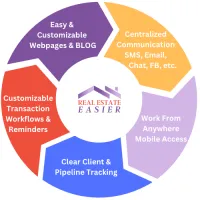
All Your Real Estate Tools And Systems In One Place


© 2026 Real Estate Easier LLC - All Rights Reserved.