

The Handoff Problem: Why Leads Slip Through the Cracks on Teams
The Handoff Problem: Why Leads Slip Through the Cracks on Teams
When you were a solo agent, lead follow-up was simple. A lead came in, you called it, and you owned the outcome start to finish. Nothing fell through the cracks because there were no cracks. There was just you.
Then you built a team. And somewhere between the lead source and the buyer's agent who was supposed to work it, deals started quietly disappearing. Not because anyone was lazy, but because the handoff itself became the weak point. This is one of the most expensive problems in a growing real estate business, and most teams do not see it until they audit where their leads actually went.
Where the Cracks Actually Form
A handoff sounds like a single moment: one person passes a lead to another. In practice it is a chain of small steps, and every step is a place to lose something.
- The assignment gap. A lead comes in, but no one is clearly on the hook for it yet. It sits for hours, sometimes overnight, before anyone claims it. In a market where speed to lead decides who gets the appointment, those hours are deals.
- The context gap. The lead gets assigned, but the agent receiving it does not know where it came from, what the person asked about, or what was already promised. So they start cold, and the lead feels the friction.
- The accountability gap. Once a lead is handed off, no one is watching whether it actually gets worked. If the agent goes quiet, the lead goes quiet, and the team lead finds out weeks later when the pipeline review comes up short.
- The re-engagement gap. A lead that is not ready today gets marked "not now" and then vanishes. There is no system pulling it back into view in three months when the timing changes.
Any one of these gaps leaks revenue. Stacked together, they explain why a team can generate more leads than ever and still feel like closings are not keeping pace.
Why Manual Handoffs Break at Scale
Most teams try to solve this with effort and reminders. A group chat. A shared spreadsheet. A morning huddle where the team lead asks who is working what. These work for a while, and then they do not.
The reason is simple: manual handoffs depend on every person remembering to do the right thing at the right time, every single day, with no exceptions. That is not a realistic standard for busy humans who are also showing homes, writing offers, and answering their phones. The system needs to carry the load that memory cannot.
At scale, the goal is not to make people try harder. It is to make the right handoff the automatic one, so that doing nothing extra still produces a clean result.
What a Clean Handoff System Looks Like
Whether you build this yourself or run it on a platform like Real Estate Easier, a reliable handoff process has a few non-negotiable parts:
- Instant, rules-based assignment. The moment a lead arrives, it routes to a specific person based on your logic: source, price point, area, or round-robin. No lead sits unclaimed.
- Full context travels with the lead. The receiving agent sees the source, the original inquiry, and every prior touch, so they open the conversation warm instead of cold.
- Built-in accountability. If a lead is not contacted inside your standard, someone is notified. The system surfaces the miss instead of hiding it until the monthly review.
- Automatic re-engagement. Long-timeline leads are not lost. They cycle back into view on schedule so a quiet "not now" does not become a permanent goodbye.
- Mobile-first for the field. Your agents live on their phones. A handoff system only works if they can see, claim, and respond to a lead from wherever they are.
Build It Around Your Team, Not the Other Way Around
The trap many teams fall into is bolting on a rigid, cookie-cutter tool and then contorting their process to fit it. That is backward. Your handoff logic should reflect how your team actually runs: your roles, your price tiers, your areas, your standards. The technology should mold to that, not force everyone to relearn the business to fit the software.
This is where customizable, AI-supported systems earn their keep. When the routing, the follow-up cadence, and the accountability rules can be shaped to your team specifically, the handoff stops being a leak and becomes a strength. Leads land where they should, get worked the way you expect, and stay in view until they close or clearly go away.
If your team is generating leads but you suspect too many are slipping between the source and the sale, start by auditing your handoff. Find the gaps, close them with a system that fits how you already work, and watch how much of your existing pipeline was there all along. If you want to see how a platform like Real Estate Easier approaches this, take a look at realestateeasier.com.
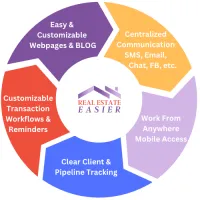
All Your Real Estate Tools And Systems In One Place


© 2026 Real Estate Easier LLC - All Rights Reserved.