

Building Multi-Channel Automation: SMS + Email + Voice Working Together
Why Single-Channel Follow-Up Is Leaving Deals on the Table
Most agents pick one channel and stick with it. They set up an email drip, call it automation, and wonder why conversion stays flat. The problem is not effort. The problem is that leads do not live in one channel.
A prospect who ignores your email at 8:00 AM might reply to a text at 11:30 AM and answer a voicemail drop at 3:00 PM. When you only use one channel, you are playing the odds of one behavior pattern. Multi-channel automation stacks the odds in your favor by meeting the lead where they actually pay attention.
This is not about blasting people on every platform simultaneously. It is about building a sequenced, logical workflow where each channel plays a specific role and triggers the next step based on what the lead does or does not do.
The Three Channels and What Each One Does Well
SMS: Speed and Brevity Win
Text messages have an open rate that email cannot touch. According to data published by SimpleTexting, SMS open rates sit around 98 percent, with most messages read within three minutes of delivery. That is not a reason to overuse it. That is a reason to use it precisely.
SMS earns its place at the front of your sequence: the initial response to a new lead inquiry, a one-line appointment confirmation, a quick re-engagement nudge after silence. Keep texts under 160 characters. Ask a single, easy-to-answer question. Never send a wall of information over SMS because you will immediately undo the channel's core advantage.
Email: Depth and Documentation
Email gives you room. Use it to deliver value: a neighborhood market snapshot, a buyer's guide, a seller's net sheet explainer, a video walkthrough link. Email also creates a paper trail your CRM can track, which feeds your behavioral triggers for the next step in the sequence.
Email is not dead. It is just slow by design. That is exactly why it belongs in the middle and long-game layers of your follow-up, not as the first touch on a hot inbound lead who just submitted a form thirty seconds ago.
Voice: Trust and Conversion
Nothing closes like a conversation. Voice drops, pre-recorded ringless voicemails, and live call tasks in your CRM all serve the same purpose: they humanize your follow-up at the point where the lead needs to feel like they are talking to a real professional, not a drip sequence.
Voice belongs at two specific points in your workflow. First, as a follow-up to a text or email that got opened but produced no reply. Second, as the trigger for a booked appointment when the lead has shown intent signals. A voicemail drop that says your name, your brokerage, and one clear next step is infinitely more effective than a third automated email saying "just checking in."
The Mechanics: How to Sequence the Three Channels
Here is a practical multi-channel workflow for a new inbound internet lead. Adjust timing to match your market's response patterns, but keep the logic intact.
Minute 0 to 5: Immediate SMS
The lead fills out a form. Your CRM fires an automated text within five minutes. Research from the Harvard Business Review found that contacting a lead within one hour makes you nearly seven times more likely to have a meaningful conversation than waiting even two hours. Five minutes is better than one hour. The text is short: one sentence acknowledging their inquiry, one question to qualify intent.
Hour 1: First Email
If the SMS produces no reply, an email goes out within the first hour. This email delivers something useful: a relevant resource, a market update specific to the area or price point they searched, or a brief video introduction. It is not a template that screams "automated." It reads like something you would actually write.
Hour 4: Voice Drop
No SMS reply. No email engagement. A ringless voicemail goes out. Your name, your brand, a specific reference to what they were looking at, and one simple ask: "Call or text me back at 617-675-5787 and I will get you exactly what you need." Specific beats generic every time.
Day 2: SMS Re-Engagement
Still no response. Send a second SMS with a different angle. If the first text referenced what they were searching for, this one references a new listing or a market shift in that area. Give them a new reason to reply, not just another reminder that you exist.
Day 3 to Day 7: Email Nurture Sequence
Now you shift to a slower email cadence. Every other day, one piece of genuinely useful content. No pressure. No "are you still looking?" questions. You are building familiarity and demonstrating expertise. The Ninja Selling framework calls this filling the relationship jar: every value-add touch is a deposit, and when the lead is ready to move, your account is full.
Week 2 and Beyond: Blended Long-Term Nurture
Leads who do not convert in the first week are not dead. According to the National Association of Realtors, the average buyer searches for a home for ten weeks before transacting. Your long-term sequence blends monthly emails with occasional SMS check-ins and periodic live call tasks assigned to your agents. The system keeps the relationship warm so the human call lands on a lead who already knows your name.
Behavioral Triggers: Where the Automation Gets Smart
Static sequences treat every lead the same. Behavioral triggers let the lead's actions reshape the workflow in real time. This is where most agents stop short because building triggers takes more setup time upfront. That setup time is exactly what separates a system that converts from a system that just runs.
Examples of behavioral triggers worth building:
- Lead opens email but does not click: send a follow-up SMS referencing the email content and asking if they have questions
- Lead clicks a listing link in email: immediately escalate to a live call task in your CRM, pulling them out of the automated sequence
- Lead replies to any SMS: pause all automated messages and route to a human response within fifteen minutes
- Lead books a showing: shift to an appointment confirmation sequence across all three channels
- Lead goes silent for 30 days: re-enter a re-engagement sequence with a fresh hook tied to a market development in their target area
Every trigger has a logic: if this, then that. Build them in your CRM once, and the system handles the routing without you watching it.
Compliance Is Not Optional
The Telephone Consumer Protection Act (TCPA) governs SMS and voice outreach in the United States. The FCC enforces it. Before you automate any text or voice drop, confirm that your lead source captures explicit written consent for automated communications. This is a legal requirement, not a best practice. If you are pulling leads from a third-party portal, check that portal's consent language carefully. If you are running your own forms, add clear opt-in language before the submit button.
Email automation falls under CAN-SPAM at the federal level. Every email needs an unsubscribe mechanism that works. Honor opt-outs promptly. Build your suppression list management into the workflow from day one, not as an afterthought.
What This Workflow Actually Produces
The payoff of multi-channel automation is not just more contacts. It is better use of agent time. When the system handles initial outreach, follow-up sequencing, and behavioral routing, your agents spend their hours on conversations that are already warm instead of cold-calling a list that has not heard from anyone in three days.
Mike Ferry's production model is built on a simple truth: more conversations with qualified people produce more appointments, and more appointments produce more closings. Multi-channel automation does not replace those conversations. It fills your pipeline with people who are already engaged enough to have them.
Build the System Once. Work the Results Every Day.
If you are running a single-channel follow-up right now, start by adding one channel to your existing sequence. Add SMS to your email workflow this week. Test response rates for thirty days. Then add voice drops for the leads who engage but do not reply. Build the triggers as you learn what your specific lead sources actually respond to.
This is not a plug-and-play product pitch. It is a framework. The agents and teams who build it properly run more productive businesses with the same headcount because the system handles the volume and surfaces the opportunities.
To dig deeper into the workflows, tools, and CRM configurations that make this work in production, visit Real Estate Easier or call directly at 617-675-5787. The systems are buildable. The results are measurable. Start building.
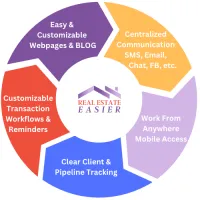
All Your Real Estate Tools And Systems In One Place


© 2026 Real Estate Easier LLC - All Rights Reserved.