

Building a Follow-Up System That Actually Runs Itself
Every agent knows the money is in the follow-up. Yet follow-up is the first thing that falls apart the moment you get busy. A listing goes live, three buyers need showings, an inspection gets tense, and suddenly the lead you spoke with last Tuesday has gone quiet for two weeks. The problem is not effort or intention. The problem is that most follow-up depends on memory, and memory does not scale.
A follow-up system that actually runs itself removes you as the point of failure. Here is how to build one that keeps working whether you are at a closing table, on vacation, or three deals deep.
Start With the Trigger, Not the Task
Most agents build follow-up around tasks: "call this person," "send that email." The problem is you have to remember to create the task in the first place. A self-running system starts one level earlier, with the trigger. A trigger is any event that should automatically start a sequence.
Map out the moments that matter in your business and decide what should happen at each one:
- A new lead comes in from a portal, a form, or an open house sign-in
- A buyer tours a property but does not make an offer
- A past client hits their home anniversary or purchase date
- A contact goes silent for 30, 60, or 90 days
- A closing wraps and a review request should go out
When the trigger fires the sequence on its own, you never have to remember anything. The event remembers for you.
Write Sequences That Sound Like You
Automation earns a bad reputation when it feels like automation. The fix is to write sequences in your own voice, the way you would actually text or email a real person. Short, direct, and human beats polished and corporate every time.
A strong sequence usually mixes channels and spaces out the touches. For a new buyer lead, that might look like a quick text within five minutes, a helpful email the next morning, a check-in call task for you two days later, and a value-add message a week out. The goal is not to blast someone. It is to stay present and useful across enough touches that you are the agent they think of when they are ready.
Write once, and the system delivers it every time with the same consistency, minus the fatigue.
Segment So the Right Message Reaches the Right Person
A follow-up system that treats a fresh internet lead the same as a repeat client will feel off to both. Segmentation keeps the message relevant. At minimum, separate your active buyers, active sellers, past clients, and long-term nurture contacts, then build a sequence tuned to each. A past client does not need a "nice to meet you" email. A brand-new lead does not need your annual market recap.
The more your system knows about where someone sits in their journey, the more natural the follow-up feels, and the less you have to think about it.
Let the System Do the Remembering
The real payoff of automated follow-up is that it protects the relationships you would otherwise lose to a busy week. This is where the right technology matters. A platform like Real Estate Easier can hold your triggers, sequences, and segments in one place and run them without you touching a thing, so the buyer who toured on Saturday still hears from you Monday even when Monday goes sideways.
Whatever tools you use, look for a few things: automated triggers that fire on real events, multi-channel sequences you can write in your own voice, segmentation that keeps messages relevant, and a mobile view so you can see what is happening while you are out in the field.
Build It Once, Then Refine
You do not need to automate your entire business in a weekend. Start with the one gap that costs you the most, usually new lead speed-to-lead or post-showing follow-up, and build that single sequence well. Once it is running, add the next one. Within a few weeks you will have a system that quietly does the work you used to scramble to remember.
The best follow-up system is the one you never have to think about. Set the triggers, write the sequences in your voice, segment your people, and let it run. Your future self, the one who never lets a lead go cold, will thank you.
If you want to see how a done-with-you platform can run this for you, take a look at what Real Estate Easier offers at realestateeasier.com.
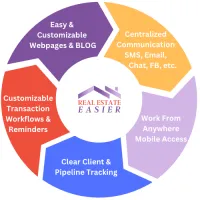
All Your Real Estate Tools And Systems In One Place


© 2026 Real Estate Easier LLC - All Rights Reserved.